Clarksville Guide
The History of Clarksville, Austin: A Freedmen's Town Since 1871
Clarksville is not a marketing name. It is a freedmen's town founded in 1871, one of the oldest west of the Mississippi, and its survival is the reason the neighborhood feels the way it does today.
The neighborhood begins with one man and one purchase. Charles Griffin, later known as Charles Clark, was, per the Texas State Historical Association’s Handbook of Texas, “born a slave in Mississippi about 1820.” On August 11, 1871, Clark bought two acres about a half mile west of Austin’s city limits from Confederate general and former Austin mayor Nathan G. Shelley for the sum of $100, and built his house at 1618 West 10th Street. The land had been part of Governor Elisha M. Pease’s Woodlawn plantation. Clark then subdivided his holding and sold parcels to other freedmen.
One of the oldest freedmen’s towns west of the Mississippi, one of four such settlements in Austin, along with Wheatville, Masontown, and Kincheonville.Texas State Historical Association, Handbook of Texas
A community built around faith and school
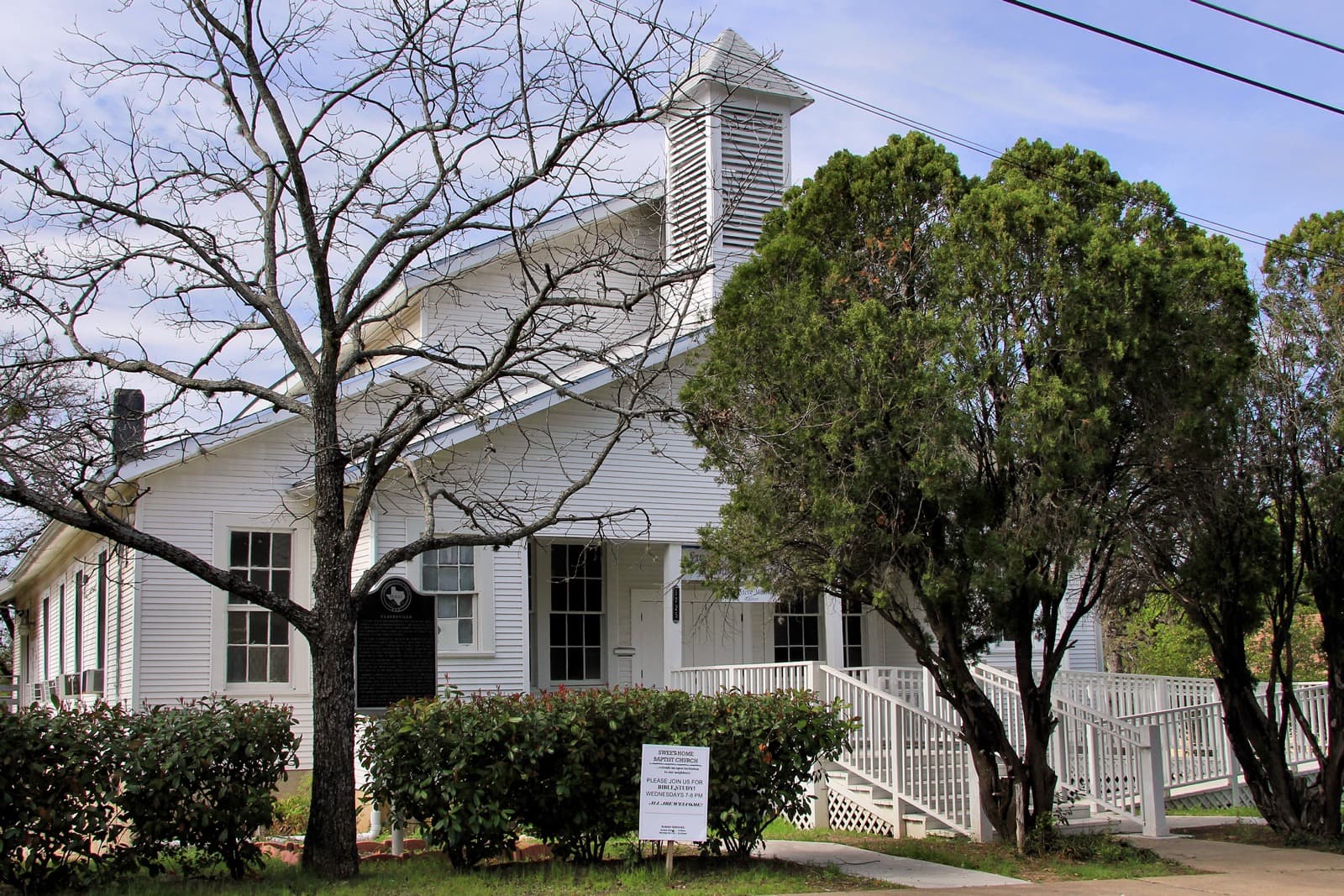
Sweet Home Missionary Baptist Church was the spiritual and social cornerstone of Clarksville. The congregation traces its origins to 1871, with Rev. Jacob Fontaine as its first minister, and the current building at 1725 West 11th Street dates to 1935. Elias Mayes, a Black state legislator, lived in Clarksville from the 1870s and bought land from Clark in 1884. The Clarksville Colored School operated from 1917 to 1965 on the site of today’s Mary Baylor Clarksville Park, tying the neighborhood’s green space directly to its history.
The houses that survived
Among the most significant surviving structures is the Haskell House, built around 1875 to 1887 at 1703 and 1705 Waterston Avenue. It is a hall-and-parlor home and a City of Austin Local Historic Landmark, one of the clearest links to the neighborhood’s founding generation. These early homes, modest in scale and set on small lots, established the grain of the streetscape that newer construction still has to respect.
Want to know if a specific home is a designated landmark?
Ask LukeMoPac, and the fight to survive
Clarksville’s modern story is one of pressure and preservation. The construction of MoPac (Loop 1) around 1971 cut through the community. Per the Handbook of Texas, twenty-six families were relocated and twenty-three more left of their own accord, and the number of homes in Clarksville fell from 162 in 1970 to fewer than 100 by 1976. Residents then defeated a separate plan to run a thoroughfare from I-35 to MoPac in 1976. Out of that fight came the Clarksville Community Development Corporation, formed to preserve affordability and the neighborhood’s character.
National recognition
In 1976, the Clarksville Historic District was added to the National Register of Historic Places, and the area sits within the broader Old West Austin Historic District. It is important to understand what that does and does not do: National Register status is largely honorific. The protections that actually govern what an owner can change are the City of Austin local historic landmark designations that some individual addresses carry. That distinction is central to any renovation or teardown decision, and it is covered in the Clarksville architecture guide.
The throughline is this: Clarksville exists today because the people who lived here refused to let it disappear. That history is not a plaque. It is the reason the lots are small, the canopy is old, the streets are walkable, and demand has stayed durable. When you buy here, you are buying into a place that was fought for.
Good to know
Clarksville questions, answered
- Who founded Clarksville, Austin?
- Clarksville was founded in 1871 by Charles Clark, a freedman born into slavery in Mississippi around 1820. On August 11, 1871, Clark bought two acres about a half mile west of Austin's then city limits from Confederate general and former Austin mayor Nathan G. Shelley for $100, and built his house at 1618 West 10th Street. He then subdivided and sold parcels to other freedmen.
- Is Clarksville one of the oldest freedmen's towns?
- Yes. The Texas State Historical Association's Handbook of Texas describes Clarksville as one of the oldest freedmen's towns west of the Mississippi, and one of four such settlements in Austin alongside Wheatville, Masontown, and Kincheonville.
- How did MoPac affect Clarksville?
- MoPac (Loop 1) construction around 1971 cut through the community. Per the Handbook of Texas, twenty-six families were relocated and twenty-three more left on their own, and the number of homes fell from 162 in 1970 to fewer than 100 by 1976. Residents defeated a separate thoroughfare plan in 1976, and the Clarksville Community Development Corporation formed to preserve affordability and character.
Work with Luke
Buy or sell where the history lives
Whether you are years from a move or ready this season, Luke Allen answers Clarksville questions personally: which blocks fit your life, what a specific home is really worth, and when the right listing is coming.

Luke Allen
Licensed Texas REALTOR, TREC #788149
Austin Marketing + Development Group